
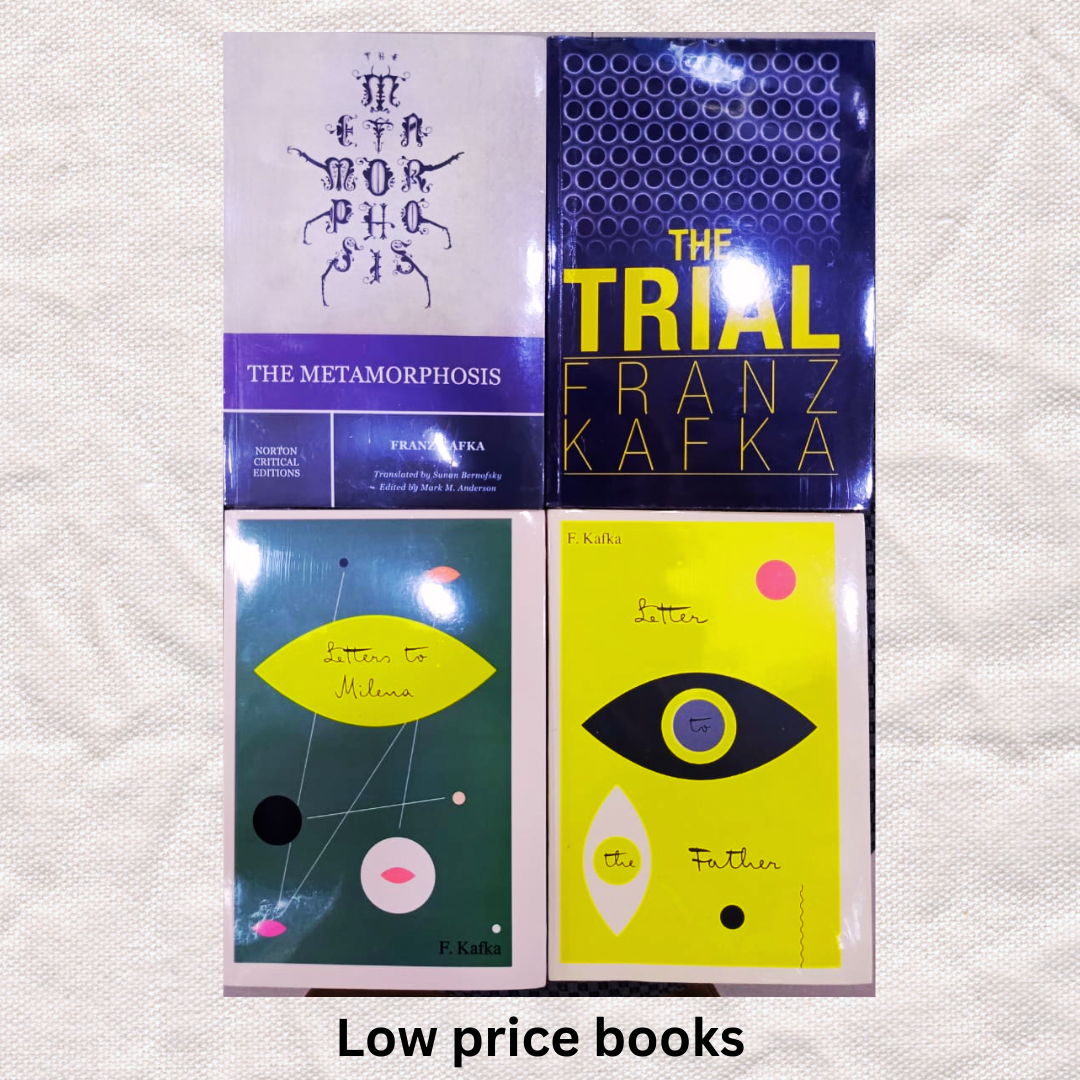
Description
Letters-to-Milena-320-pages-Letter-to-His-Father-127-pages-The-Metamorphosis-232-pages-The-Trial-255-pages-1)Letters-to-Milena-The-passionate-but-doomed-epistolary-love-affair-between-a-Czech-translator-and-one-of-the-greatest-writers-of-the-twentieth-century,-the-author-of-The-Metamorphosis-and-The-Trial.-“Extraordinary…touching,-horrifying,-brilliant,-sickly,-[and]-heartbreaking….-The-most-significant-key-we-have-for-a-reading-of-the-author’s-novels-and-short-stories.”-—The-New-York-TimesIn-no-other-work-does-Franz-Kafka-reveal-himself-as-in-Letters-to-Milena,-which-begins-as-a-business-correspondence-but-soon-develops-into-an-epistolary-love-affair.-Kafka’s-Czech-translator,-Milena-Jesenská,-was-a-gifted-and-charismatic-twenty-three-year-old-who-was-uniquely-able-to-recognize-Kafka’s-complex-genius-and-his-even-more-complex-character.-For-thirty-six-year-old-Kafka,-she-was-“a-living-fire,-such-as-I-have-never-seen.”-It-was-to-Milena-that-he-revealed-his-most-intimate-self-and,-eventually,-entrusted-his-diaries-for-safekeeping.2)Letter-to-His-Father-This-letter-is-the-closest-that-Kafka-came-to-setting-down-his-autobiography.-He-was-driven-to-write-it-by-his-father’s-opposition-to-his-engagement-with-Julie-Wohryzek.-The-marriage-did-not-take-place;-the-letter-was-not-delivered.-The-new-edition-includes-the-last-letter-Kafka-wrote-to-his-parents-as-he-lay-dying-of-tuberculosis-near-Vienna-in-1924.In-his-preface-he-[the-translator-Howard-Colyer]-states-that-he-was-most-concerned-to-reproduce-the-raw-“venting-of-feelings”-in-the-letter-as-well-as-the-extraordinary-“momentum-of-the-prose.”-In-both-these-aims-he-succeeds.-Unlike-earlier,-and-fussier,-versions,-his-translation-catches-the-naked-energy-of-the-original.—-New-York-Sun,-Eric-Ormsby-3)The-Metamorphosis-Franz-Kafka’s-1915-masterpiece-is-presented-in-this-Norton-Critical-Edition-in-the-acclaimed-translation-by-Stanley-Corngold-based-on-the-definitive-German-edition.The-novella-is-fully-annotated-and-is-accompanied-by-selected-textual-variants.-Backgrounds-and-Contexts-introduces-readers-to-The-Metamorphosis-in-the-richest-possible-setting.-The-links-between-the-author’s-life-and-his-work-are-explored-through-an-examination-of-his-personal-writings.-Kafka’s-letters-and-diary-entries-illuminate-the-creative-process-behind-his-portrait-of-Gregor-Samsa,-his-family,-and-their-nightmarish-order.-Criticism-collects-seven-essays-from-the-period-1970-95-representing-the-most-important-currents-in-literary-theory—semiotics,-feminism,-identity-philosophy,-New-Historicism,-and-post-Freudian-cultural-psychoanalysis.-The-essays-offer-a-variety-of-perspectives-on-the-novella-by-Iris-Bruce,-Nina-Pelikan-Straus,-Kevin-W.-Sweeney,-Mark-Anderson,-Hartmut-Binder,-Eric-Santner,-and-Stanley-Corngold.-A-Chronology-and-Selected-Bibliography-are-also-included.4)The-TrialWritten-in-1914-but-not-published-until-1925,-a-year-after-Kafka’s-death,-The-Trial-is-the-terrifying-tale-of-Josef-K.,-a-respectable-bank-officer-who-is-suddenly-and-inexplicably-arrested-and-must-defend-himself-against-a-charge-about-which-he-can-get-no-information.-Whether-read-as-an-existential-tale,-a-parable,-or-a-prophecy-of-the-excesses-of-modern-bureaucracy-wedded-to-the-madness-of-totalitarianism,-The-Trial-has-resonated-with-chilling-truth-for-generations-of-readers.

There are no reviews yet.